You Built the Thing. Now Build the Brand.
 Jax JacksonBy William "Jax" Jackson
You Built the Thing. Now Build the Brand.
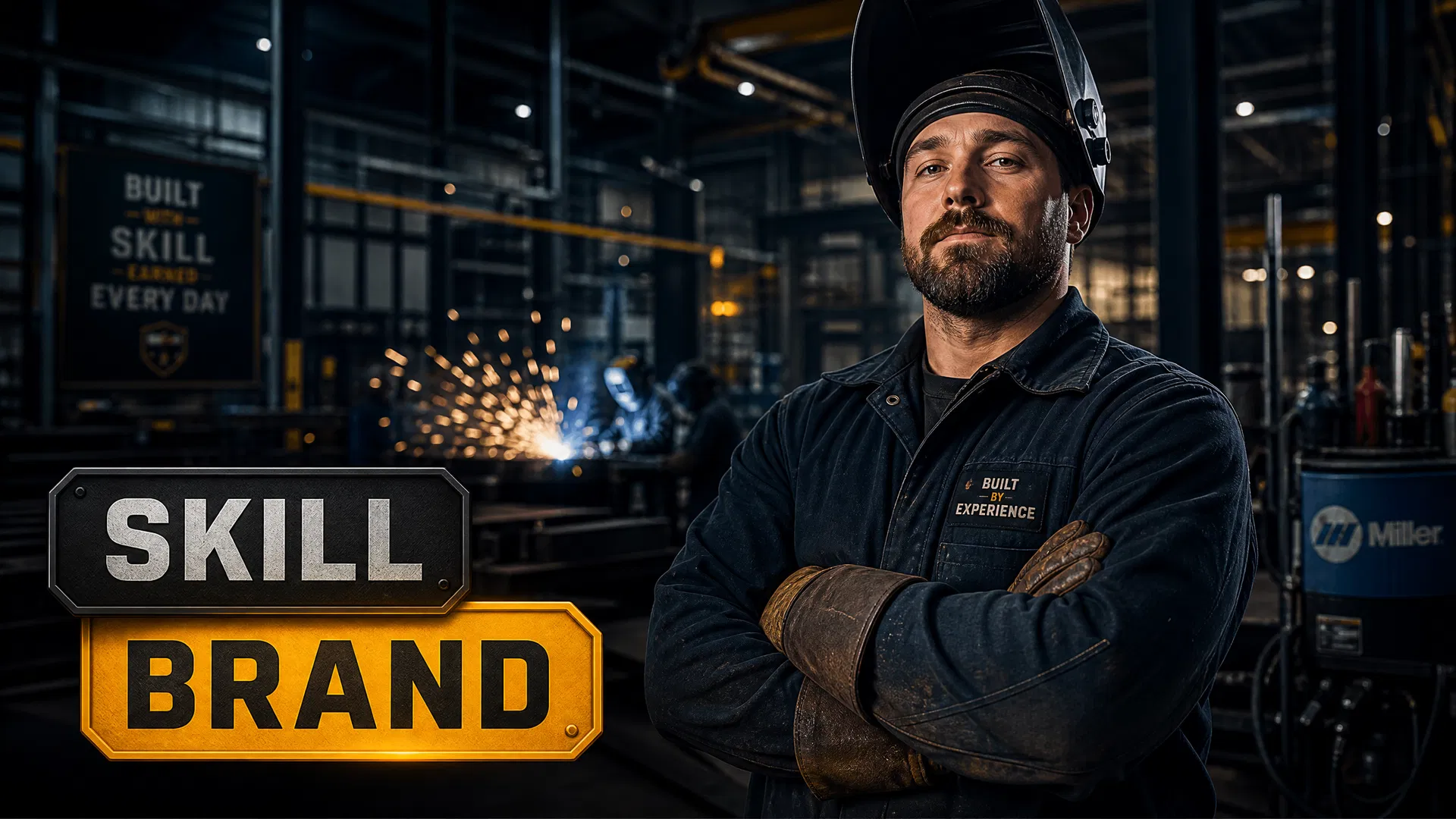
There is a version of this conversation that gets condescending fast, and I want to avoid it. You already know you're skilled. You've spent years, maybe decades, mastering a trade that most people couldn't do on their best day. You weld structural steel, wire commercial buildings, run HVAC systems, lay pipe, or operate equipment that costs more than most people's houses. The work speaks for itself.
Except when it doesn't.
The problem isn't your skill. The problem is that in 2026, the people making hiring decisions, awarding contracts, and handing out the best opportunities are increasingly making those decisions before they ever see your work. They're making them based on what they can find about you, or can't find, before the first conversation happens.
That's the gap. And it's costing skilled tradespeople real money.
The Trades Are Not Immune to Personal Branding
I hear this pushback regularly: "I'm not a LinkedIn influencer. I'm a plumber. My reputation speaks for itself."
Fair. But here's what's actually happening in the market right now.
The skilled trades are facing a generational talent shortage. The Bureau of Labor Statistics projects that the construction and extraction sector alone will need to fill over 700,000 positions annually through 2032. Demand is high. Qualified people are scarce. That should mean every experienced tradesperson has leverage.
And yet the best-paying jobs, the foreman and superintendent roles, the union leadership positions, the contractor slots on federal projects, they're not going to the most skilled person in the room. They're going to the person who is both skilled and visible. The person who has built a reputation that extends beyond the job site they're currently standing on.
Your skill gets you in the door. Your brand determines which door opens.
What a Trades Personal Brand Actually Is
Let me be precise about this, because "personal brand" gets used loosely and it sounds fake when applied to people who work with their hands.
A trades personal brand is not a logo. It's not a social media presence for its own sake. It's not pretending to be something you're not.
It is the answer to this question: When someone who has never worked with you hears your name, what do they think?
Do they think "solid guy, shows up on time, does clean work"? That's a reputation. It's good. But it's passive, it only travels as far as the people who've worked with you directly.
A personal brand is that same reputation, made portable and searchable. It's the version of your professional identity that can travel ahead of you into rooms you haven't entered yet.
For a tradesperson, that might look like being known as the electrician who specializes in industrial automation retrofits. Or the welder who has documented 15 years of structural certifications and zero failed inspections. Or the HVAC technician who understands both the mechanical side and the building automation systems that commercial clients increasingly require.
Specificity is the engine of a trades brand. Generalists are commodities. Specialists with a documented track record are assets.
The Three Pillars of a Trades Personal Brand
Pillar One: Documented Competency
Certifications, licenses, and endorsements are the foundation, but most tradespeople treat them as a checklist rather than a brand asset. Your AWS welding certifications, your OSHA 30, your journeyman card, your manufacturer-specific training, these are not just qualifications. They are proof points that belong in front of people before they ever ask for your resume.
The practical move here is to build a simple, scannable professional profile, LinkedIn works, but so does a basic one-page website, that lists your certifications with dates, your specializations, and the types of projects you've worked on. Not a novel. A clear, factual record that answers the question any hiring contractor or project manager is going to ask: Can this person do what they say they can do?
Pillar Two: Visible Work History
Most tradespeople have an impressive body of work that is completely invisible to anyone who wasn't on the job site. The hospital wing you helped wire. The bridge deck you poured. The data center you helped build from the ground up. These projects exist. They're real. But if they're not documented anywhere, they don't exist in the minds of the people who weren't there.
You don't need to post a daily photo diary. But a periodic record of significant projects, the type of work, the scale, the specialization involved, creates a searchable history that compounds over time. A hiring manager who can see that you've worked on three major healthcare facility projects is not going to call you a general electrician. They're going to call you the person they want on their next healthcare build.
Pillar Three: A Clear Value Statement
This is the Hallway Resonator applied to the trades. It's the one-sentence answer to the question: "What do you do, and why does it matter?"
Not "I'm an electrician." That's a job title. A value statement sounds more like: "I specialize in industrial electrical systems for manufacturing facilities, with a focus on minimizing downtime during retrofits." Or: "I'm a pipefitter who's spent the last eight years on large-scale petrochemical projects where zero-defect welding isn't optional."
That sentence does two things. It positions you as a specialist rather than a generalist. And it signals to the right people, the ones who need exactly what you do, that you're the person they should be talking to.
The Veteran Tradesperson's Specific Advantage
If you came out of the military into the trades, or if you're a veteran who has been working in the trades for years, you have a brand asset that most of your civilian counterparts don't have and can't replicate: documented performance under pressure, in high-stakes environments, with real consequences for failure.
Military maintenance technicians, combat engineers, Navy nuclear operators, Air Force crew chiefs, these are not just job titles. They represent a standard of precision, safety culture, and operational discipline that the civilian trades market genuinely values but rarely gets to hire.
The mistake most veteran tradespeople make is treating their military background as a separate chapter, something that ended when they got out. It didn't end. It's the foundation of your professional identity, and it belongs front and center in your brand.
The veteran who can say "I maintained F-16 avionics systems to zero-defect standards for eight years before transitioning to commercial electrical work" is not competing with the average journeyman. They're in a different conversation entirely.
Where to Start This Week
You don't need to overhaul your entire professional identity. You need to take three specific actions.
Action one: Pull together your certifications, licenses, and endorsements into a single document. Include the issuing body, the date, and the renewal status. This is your credential inventory. It's the raw material for everything else.
Action two: Write down the five most significant projects you've worked on in the last five years. For each one, note the type of project, your specific role, the scale, and any specialized skills it required. These are your proof points. They belong in your professional profile.
Action three: Write your value statement. One sentence. Specific trade, specific specialization, specific type of client or project. Read it out loud. If it sounds like something anyone in your trade could say, it's not specific enough. Tighten it until it sounds like something only you could say.
That's your starting point. Not a complete brand overhaul, a foundation. Build from there.
The Market Is Paying a Premium for Visible Expertise
The trades shortage is real, and it is not going away. That means the market is actively looking for people like you. The question is whether it can find you.
Skill without visibility is a ceiling. Skill with a clear, documented, portable brand is a multiplier. The contractor who knows your name before they post the job is not going to post the job, they're going to call you directly.
That's the difference between waiting for work and having work come to you.
Connect with Jax Jackson
For more insights on talent branding and career positioning across every sector, connect with me on LinkedIn, subscribe to my Jax Nexus Substack, or follow The Nexus Chronicles newsletter for practical strategies on building a professional brand that works as hard as you do.
Ready to build a brand that matches your skill level? Start with the Hallway Resonator Builder at Jax Nexus and craft the one-sentence value statement that positions you as the specialist, not just another name on a list.
Lock on. Execute. Win.
, Jax
The views expressed in this article are those of the author based on personal experience and do not reflect the official policy or position of the Department of Defense, the Office of Personnel Management, or the U.S. Government.
Found this useful? Share it with someone who needs it.
Share on LinkedInNever Miss an Insight
Subscribe to get biweekly talent branding strategies and career transition tips.
Free insights. No spam. Unsubscribe anytime.
Subscribe to The Passdown
Biweekly federal hiring intel, one execution drill, and what's actually working for veterans getting federal offers right now.
Subscribe Free →Your next mission: Know your federal career value.
Calculate your GS grade and salary range based on your MOS, clearance, and experience. Takes 3 minutes. Chapter 10 included.
Calculate NowDisclaimer: The views expressed are the author's personal experience and do not reflect the official policy of the Department of Defense, Office of Personnel Management, or U.S. Government.
Continue the field work
Related Posts
Keep building your transition strategy with the next useful read.
Your Title Is Not Your Brand. Your Reputation Is.
Competence is the floor, not the ceiling. In a market reshaped by layoffs, AI, and remote work, being good at your job is no longer enough. Here is how white collar professionals build a brand that opens the right doors before they need them open.
The Danger Zone Nobody Talks About
The gap between leaving the military and landing a civilian job leaves veterans vulnerable at a critical moment. SMMC Ruiz connected hiring delays to veteran mental health. Here's how to close the gap from your side.
Partnerships Won't Save You. Preparation Will.
The Sergeant Major of the Marine Corps wants Big Tech to guarantee you a job. It's a great vision. But you can't wait for the system. Here's how to build your own partnership.